

How to Help Your Child Focus on Homework: 10 Proven Strategies That Work
It’s 5:30 p.m. The backpack is on the floor, the snack is gone, and your child has been “starting” the same math worksheet for forty minutes. In that time you’ve answered questions about the dog, a missing pencil, and, somehow, how volcanoes work. Sound familiar?
If your child can’t focus on homework, you are far from alone. Across the United States, parents say the after-school hours are among the hardest of the day. Kids come home tired, hungry, and often still wound up from a long day of sitting, listening, and following rules. Asking them to concentrate again can feel like asking a marathon runner to start a second race.
The good news is that focus is a skill, not a fixed trait, and it can be taught. In this guide, you’ll learn why homework attention problems happen, ten practical strategies you can start tonight, how expectations change from elementary school to high school, and when trouble focusing may be worth discussing with your child’s teacher or pediatrician.
Why Kids Struggle to Focus on Homework
Before fixing the problem, it helps to understand it. Trouble focusing rarely comes from laziness or defiance. More often, one or more of these factors is at work:
- Mental fatigue. Kids spend six or seven hours a day concentrating at school. By 4 p.m., their “focus tank” may be nearly empty.
- Hunger or low energy. A skipped afternoon snack can make even easy tasks feel impossible.
- Digital distractions. Phones, tablets, and laptops put games, videos, and group chats one tap away. Even a silent notification can pull attention off task.
- Tasks that feel too big or too hard. When an assignment feels overwhelming, avoidance is a natural response. If it turns into outright refusal, our guide on what to do when your child refuses to do homework walks through calm responses that work.
- Poor sleep. Tired kids are distractible kids. We explain this in detail in our guide to how much sleep school-age kids need.
- Learning or attention differences. Sometimes a focus problem is a clue rather than just a habit. More on that later in this article.
The strategies below address each of these causes, so you can mix and match based on what you see at your kitchen table.
Strategy 1: Build a Predictable Homework Routine
Kids focus better when they know what’s coming. Choose a consistent start time and make homework the same “next thing” every day. Many families find that 30 to 60 minutes after getting home works well, because it gives kids time to eat and decompress first.
A predictable routine reduces daily negotiation because the schedule, not the parent, becomes the authority. Post the plan on the fridge: snack, break, homework, free time. You can stay flexible on game days or activity nights, but keep the sequence the same. Evenings also run more smoothly when mornings do, and our best morning routine for school days guide shows how healthy habits at both ends of the day support each other.
Strategy 2: Let Them Move First
Physical activity is one of the most effective focus boosters available, and it’s free. Even 10 to 20 minutes of running, biking, jumping rope, or shooting hoops before homework can help kids settle in. Children who have been sitting in classrooms all day especially need to release that energy.
Research consistently links physical activity with better attention and classroom behavior, which we break down in how exercise improves concentration in children. If time is tight, try a quick “movement snack”: 20 jumping jacks, a lap around the yard, or a dance break to one favorite song. It takes five minutes and can change the whole homework session.
Strategy 3: Create a Distraction-Free Homework Zone
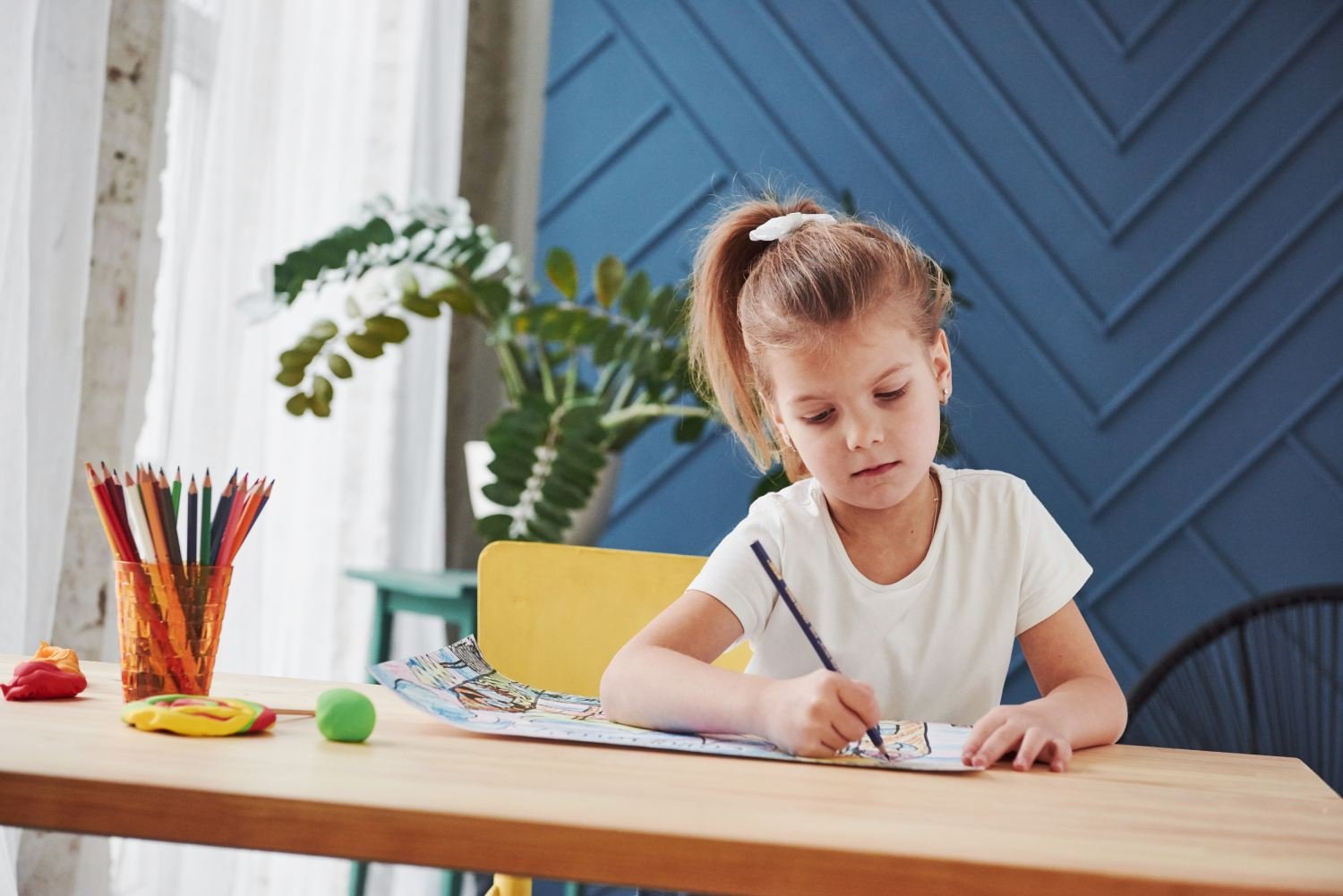
Choose one spot, such as the kitchen table, a desk, or a quiet corner, and stock it with pencils, paper, a calculator, a water bottle, and anything else your child commonly needs. That way there are no “I can’t find my eraser” detours that turn into twenty minutes of wandering.
Keep the TV off and keep sibling noise to a minimum when you can. Some kids focus best in total quiet, while others work better with soft instrumental music or white noise, so experiment and let the results guide you. For younger children, working near you, perhaps at the kitchen table while you cook dinner, often works better than being alone in a bedroom full of toys.
Strategy 4: Put Devices Out of Reach
This is the big one. If your child doesn’t need a device for an assignment, place phones and tablets in another room or in a basket by the door. If they do need a computer, close extra tabs and consider built-in tools such as Apple’s Screen Time or Google Family Link, which let you limit apps during set hours.
Many U.S. schools now limit phones during the school day, and the same logic applies at home. Our overview of school cellphone bans and what parents need to know explains why the trend is growing. Once homework is done, make the switch away from screens easier by offering appealing alternatives. Our list of screen-free activities for kids after school has more than 50 ideas for every age.
Strategy 5: Break Big Assignments into Small Steps
A two-page essay is intimidating. “Write three sentences about your main idea” is not. Help your child split projects into small, concrete steps and check them off one at a time. Each checkmark gives a small dose of satisfaction that builds momentum.
For long-term projects such as science fair boards or book reports, work backward from the due date and add mini-deadlines along the way. This is also the heart of time management, which you can teach step by step using our age-by-age guide to teaching kids time management. Kids who learn to plan ahead spend less time panicking and more time actually focusing.
Strategy 6: Use Short Work Sprints with Breaks
Most children can’t concentrate for long stretches, and that’s developmentally normal. A common rule of thumb supported by the National PTA and the National Education Association is about 10 minutes of homework per grade level per night. That means roughly 10 minutes for a first grader and about 60 minutes for a sixth grader.
Within that time, use short sprints: 10 to 15 minutes of work for younger kids and 20 to 25 minutes for older students, followed by a 3 to 5 minute break. A visual timer helps children see time passing and makes the finish line feel real. Make sure breaks are real breaks, such as stretching, getting water, or petting the dog, rather than a trip down a video rabbit hole that’s hard to leave.
Strategy 7: Start with the Hardest Task, or the Easiest
Which order works best depends on the child. Kids who have plenty of energy at the start often do best tackling the toughest subject first, while their brains are fresh. Kids who struggle to get going may need an easy win first to build confidence and momentum.
Try both approaches for a week and notice which leads to fewer meltdowns. Let your child help decide, because having a say increases buy-in. If your child always saves the hard subject for last and then runs out of steam, that’s useful information too, and a sign to switch the order.
Strategy 8: Fuel the Brain with a Smart Snack
Hungry kids are distractible, grumpy kids. Offer a balanced after-school snack that pairs protein or healthy fat with fiber. Good options include apple slices with peanut butter, cheese with whole-grain crackers, Greek yogurt with berries, hummus with veggies, or a handful of nuts if your child is old enough and there are no allergies.
Skip sugary drinks and candy, which can lead to an energy spike followed by a crash right in the middle of long division. Water is the best drink for homework time. Energy drinks are a poor choice for children and teens, and pediatric experts generally recommend avoiding them.
Strategy 9: Stay Nearby, but Don’t Take Over
Parents are coaches, not co-authors. Stay close enough to answer questions and offer encouragement, but resist the urge to correct every mistake or finish the work yourself. When your child gets stuck, ask guiding questions: “What is the problem asking?” “What have you tried so far?” “Where did you see an example like this in class?”
Doing the work for them may end tonight’s battle, but it undermines independence and hides gaps that teachers need to see. If frustration runs high or a bad grade comes home, the setback can also hit confidence. Our guide on building your child’s confidence after failing a test offers scripts and strategies that help kids bounce back.
Strategy 10: Praise Effort and Celebrate Progress
Specific, effort-based praise works better than general praise. Instead of “You’re so smart,” try “I noticed you stuck with that tough problem even when it was frustrating.” This teaches kids that effort, not just talent, leads to success.
Consider a simple reward system for consistency, such as a favorite family game night after a full week of focused homework sessions. Tie rewards to effort and routine rather than grades alone, so your child learns that focus pays off even when a subject is hard. The goal is for kids to feel proud of how they work, not just what they score.
Homework Focus Tips by Age
What works for a second grader won’t work for a high school junior. Here’s how to adjust as your child grows.
Kindergarten to 2nd grade (ages 5–8): Homework should be short, about 10 to 20 minutes at most. Attention spans are brief, so use timers, sit beside your child, and mix in hands-on tasks such as counting objects or reading aloud together. Keep the mood playful and end on a positive note.
3rd to 5th grade (ages 8–11): Kids start taking on more independence. Introduce a planner or simple checklist and teach them to pack their backpack the night before. Check in at the start and end of homework time rather than hovering the whole time.
Middle school (grades 6–8): The workload grows and so does the number of teachers. Executive function skills such as planning, organizing, and managing time are still developing, so expect some slip-ups. A weekly planning session on Sunday evening helps, as does a shared digital calendar for tests and deadlines.
High school (grades 9–12): Teens need autonomy, but they still benefit from structure. Talk openly about balancing homework with sports, jobs, and activities, and keep phones out of reach during study blocks. Encourage them to use school resources such as teacher office hours and peer tutoring before they fall behind.
When Trouble Focusing Might Be Something More
Occasional distraction is normal. But if your child consistently struggles to focus despite a good routine, it may be worth a closer look. Talk with the teacher and your pediatrician if you notice:
- Focus problems that show up both at school and at home and last for several months
- Frequent forgetting of instructions, losing materials, or difficulty finishing tasks
- Unusual difficulty with reading, writing, or math compared with classmates
- Extreme frustration, tears, or avoidance around schoolwork
- Signs of anxiety, low mood, or trouble sleeping
Attention-deficit/hyperactivity disorder (ADHD), learning disabilities such as dyslexia, vision or hearing problems, anxiety, and sleep disorders can all affect focus, and only a qualified professional can diagnose them. Our guide to learning difficulties in school kids, including signs, causes, and how to help explains the early warning signs in more detail.
In the United States, parents can also request a free evaluation from their child’s public school in writing. Depending on the results, your child may qualify for support through an Individualized Education Program (IEP) or a 504 plan. Getting help early almost always makes school easier and less stressful for everyone.
Frequently Asked Questions
How long should my child spend on homework each night?
A good guideline is about 10 minutes per grade level, so a third grader would have around 30 minutes. If your child regularly spends much longer, talk with the teacher. It may signal that the work is too hard, or that your child is struggling to focus.
Should my child listen to music while doing homework?
It depends on the child and the task. Soft instrumental music can help some kids block out household noise, but music with lyrics often competes with reading and writing. Try both and see which gets better results.
Is it okay to use rewards to get my child to do homework?
Small, simple rewards can help build a routine, especially for younger kids. Focus on rewarding effort and consistency, and gradually fade rewards as the habit becomes automatic.
What if my child focuses fine at school but not at home?
This is common. School has built-in structure, while home is full of comfort and distractions. Recreate classroom structure with a set time, a set place, and clear start and stop points. If problems persist, check in with the teacher to compare notes.
Final Thoughts
Helping your child focus on homework isn’t about perfect discipline. It’s about setting up an environment, a routine, and expectations that make concentration easier. Start with just two or three strategies from this list, such as a consistent start time, a device-free zone, and a movement break, and give them a couple of weeks before judging the results.
With patience, small adjustments, and plenty of encouragement, most kids build stronger focus over time. And if you suspect something deeper is going on, trust your instincts and reach out to your child’s teacher or doctor. You know your child best.
Disclaimer: This article is for general informational purposes only and is not a substitute for professional medical, legal or educational advice. Always consult your child’s pediatrician, teacher or a qualified professional about your child’s specific needs.